
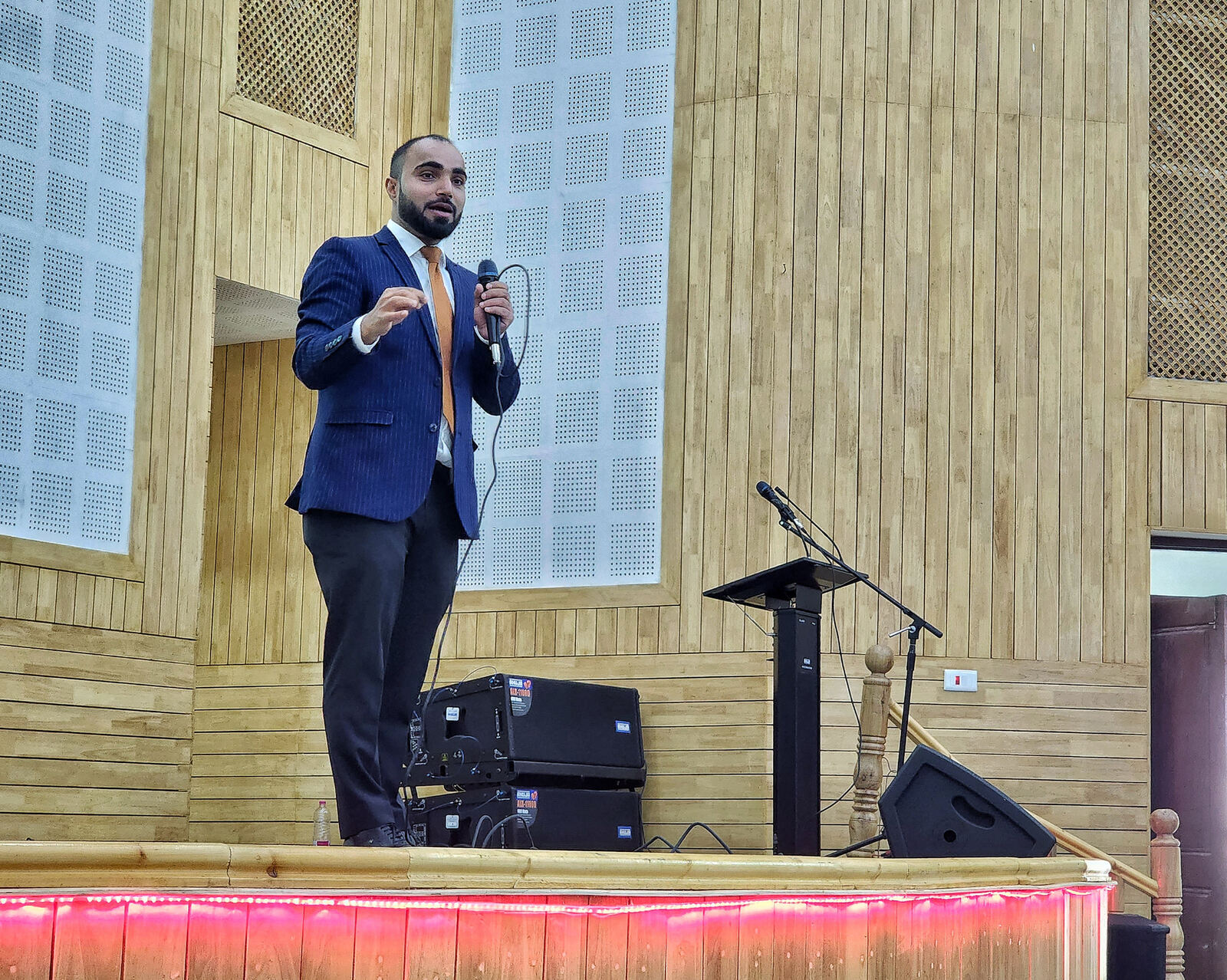
I have said this sentence on stages across India, and it always gets a reaction: motivation does not last.
Some people laugh, because they recognise it. Some look uncomfortable, because they came to the talk hoping to be motivated. I understand. Motivation feels wonderful. That surge of energy after a powerful video, a great book, a new year. You feel like you could change everything.
And then, usually within a couple of weeks, it fades. Not because you are weak. Because motivation is an emotion, and emotions are designed to pass.
What lasts instead
If motivation is the spark, three things are the fuel.
1. Identity
People who sustain change usually stop thinking "I'm trying to read more" and start thinking "I'm a reader". The behaviour flows from who they believe they are.
Ask yourself: who is the person who would do this naturally? Then take one small action that person would take today. Every action is a vote for the identity you are building.
2. Systems
Motivation asks, "Do I feel like it?" A system does not ask. It is already decided.
If you want to write, decide the time and place: 7am, kitchen table, ten minutes. If you want to exercise, put your shoes by the door the night before. Make the right action the easy action.
3. Meaning
When the feeling fades, meaning remains. Why does this matter to you? Not why should it matter, but why does it? A father who wants to be healthy so he can walk his daughter to school has a reason that outlasts any motivational video.
Motivation gets you started. Identity, systems and meaning get you through February.
Why we keep chasing motivation
If motivation is so unreliable, why do we keep relying on it? Partly because it feels so good. A surge of motivation is pleasant in itself. We start chasing the feeling rather than the change.
There is a whole industry built on this. Videos, quotes, speeches, each one a small hit of inspiration. I give talks myself, and I hope they inspire people. But I always tell audiences the truth: this feeling will fade by next week. What you do with it before it fades is what matters.
The most useful thing to do with a burst of motivation is not to start a huge new routine. It is to build the system that will carry you when the feeling is gone. Use the energy to set things up: buy the notebook, schedule the time, tell a friend, remove the obstacle. Let motivation build the road, so discipline does not have to.
Discipline is not punishment
Many people hear "discipline" and imagine something harsh: forcing yourself, gritting your teeth, punishing yourself for failing. No wonder they avoid it.
I see discipline differently. Discipline is simply remembering what you want most, at the moment you are tempted by what you want now. It is a form of self-respect. It is keeping a promise to the person you are becoming.
Seen this way, discipline becomes kinder. It is less about force and more about faithfulness.
The role of environment
We underestimate how much our surroundings shape our behaviour. If the phone is on the bedside table, you will scroll before sleep. If the book is there instead, you might read. If unhealthy food is in the cupboard, you will eat it on tired evenings.
Change your environment and you need far less motivation. Make good choices visible and easy. Make poor choices invisible and slightly harder. This is not weakness; it is wisdom. Even the most disciplined people design their environments carefully.
A familiar conversation
Imagine a student who has watched dozens of motivational videos. She feels inspired every time, yet nothing in her life changes. Ask her when she studies, and the answer is telling: "Whenever I feel motivated."
There it is. The fix is not another video. It is a plan: forty-five minutes, every evening after dinner, at the same desk, phone in another room. No feeling required.
That is the shift I hope every reader makes. Stop waiting to feel like it. Decide, design and begin.
A gentler way to begin
Most people start too big. They go from no exercise to an hour a day, from no reading to a book a week. Then motivation fades and the gap feels impossible.
Start so small it feels almost silly. Two pages. Five push-ups. One minute of noticing. The goal in the first weeks is not progress. It is proof that you show up.
When you fall off
You will miss days. Everyone does. The difference between people who change and people who do not is not that they never stop. It is that they restart quickly. Have a simple rule: never miss twice.