The blog
Notes on seeing,
growing & speaking
Essays, practices and stories on Bloomseeing, mindset and change, personal growth with Compass, and the craft of speaking. New writing every Sunday.
All writing

The story you keep telling yourself, and how to rewrite it
Most limiting beliefs are not facts. They are old stories, repeated so often they sound like truth. Here is how to find yours and begin rewriting it.
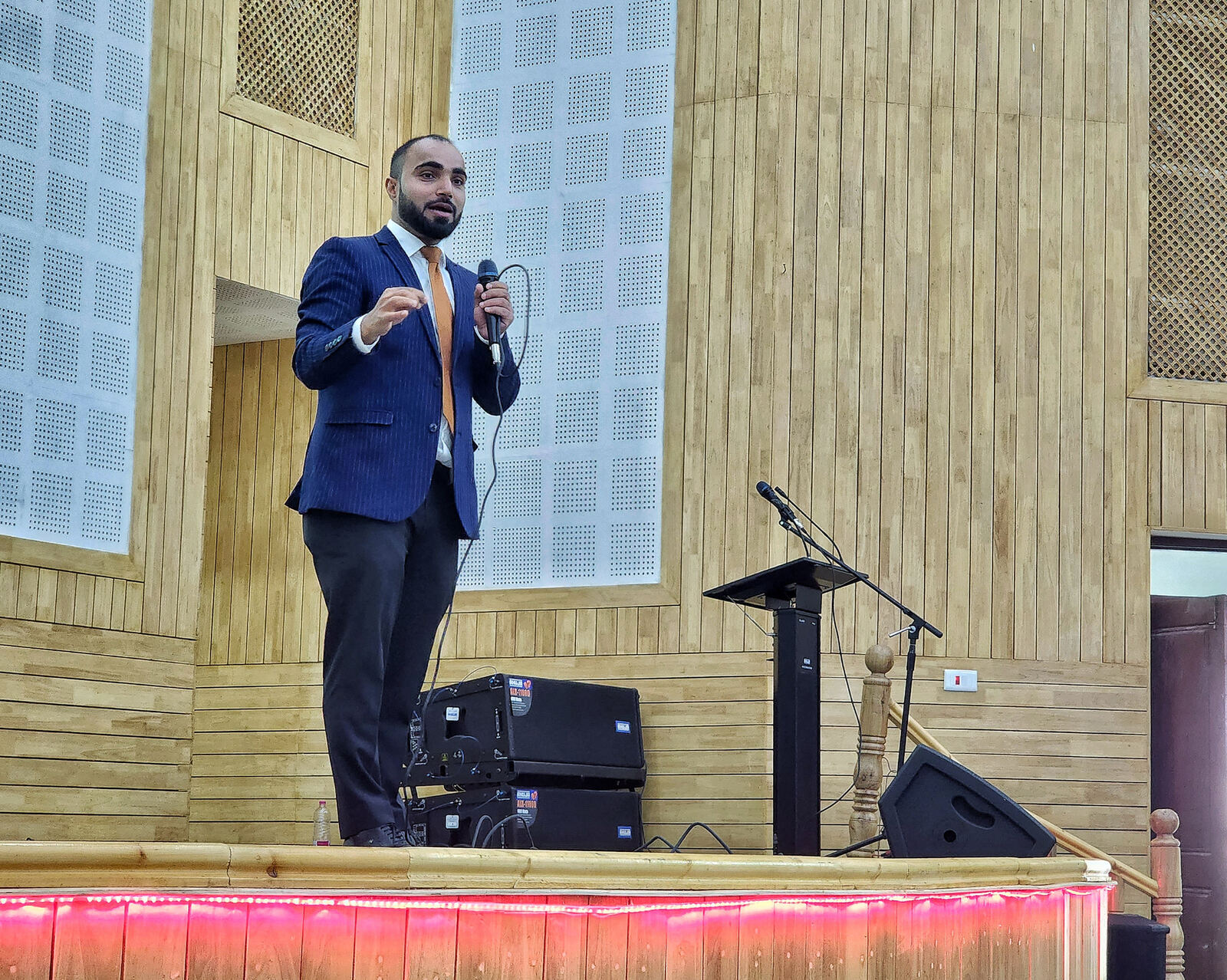
Motivation does not last. Here is what does
Every January we rely on motivation, and every February it disappears. The people who change are not more motivated. They have something better.
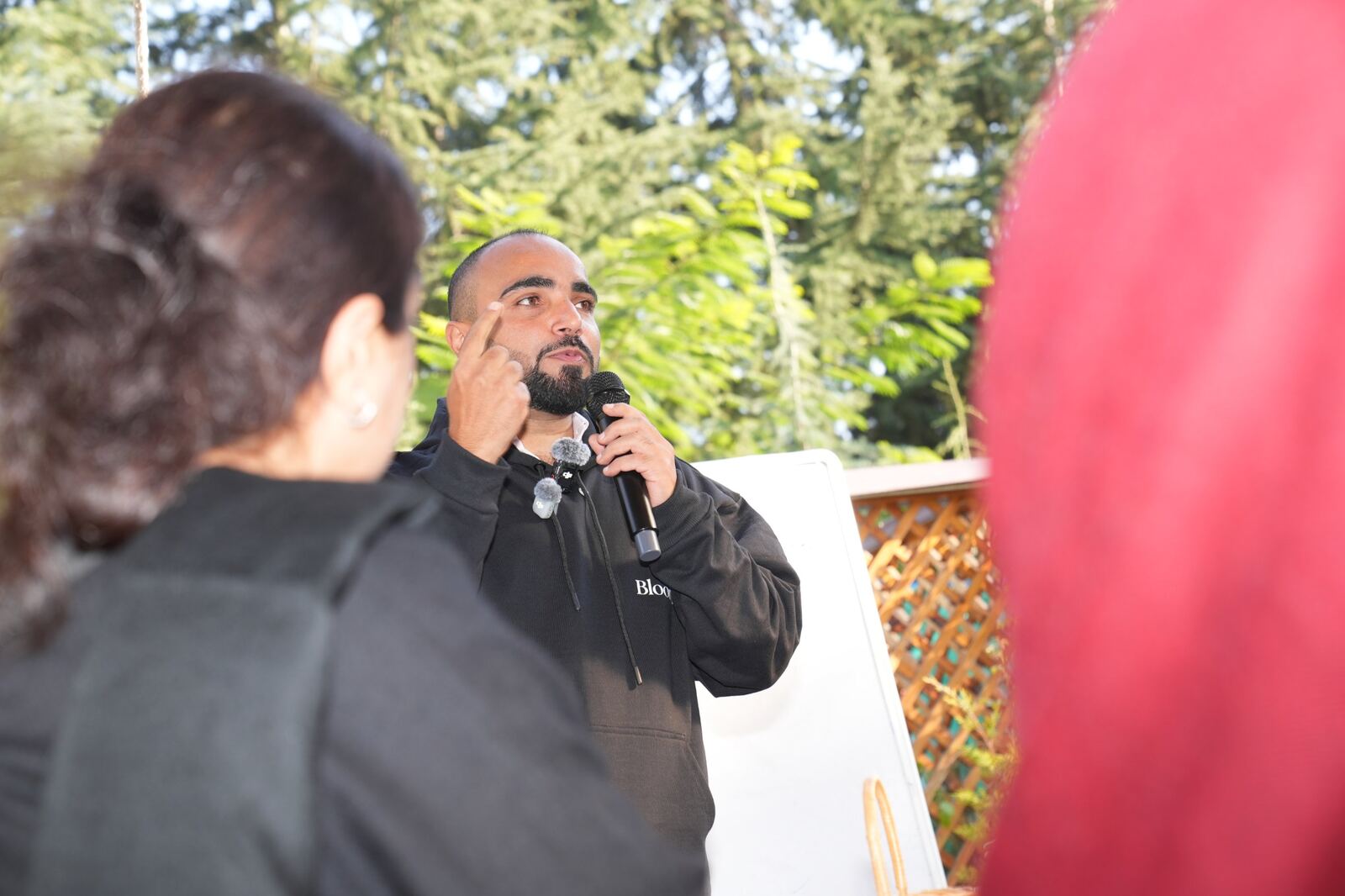
What is Compass? Belong, Bloom, Become
Compass is the banner under which I run immersive, practical programmes for personal growth. Here is what it is, who it is for and why it exists.
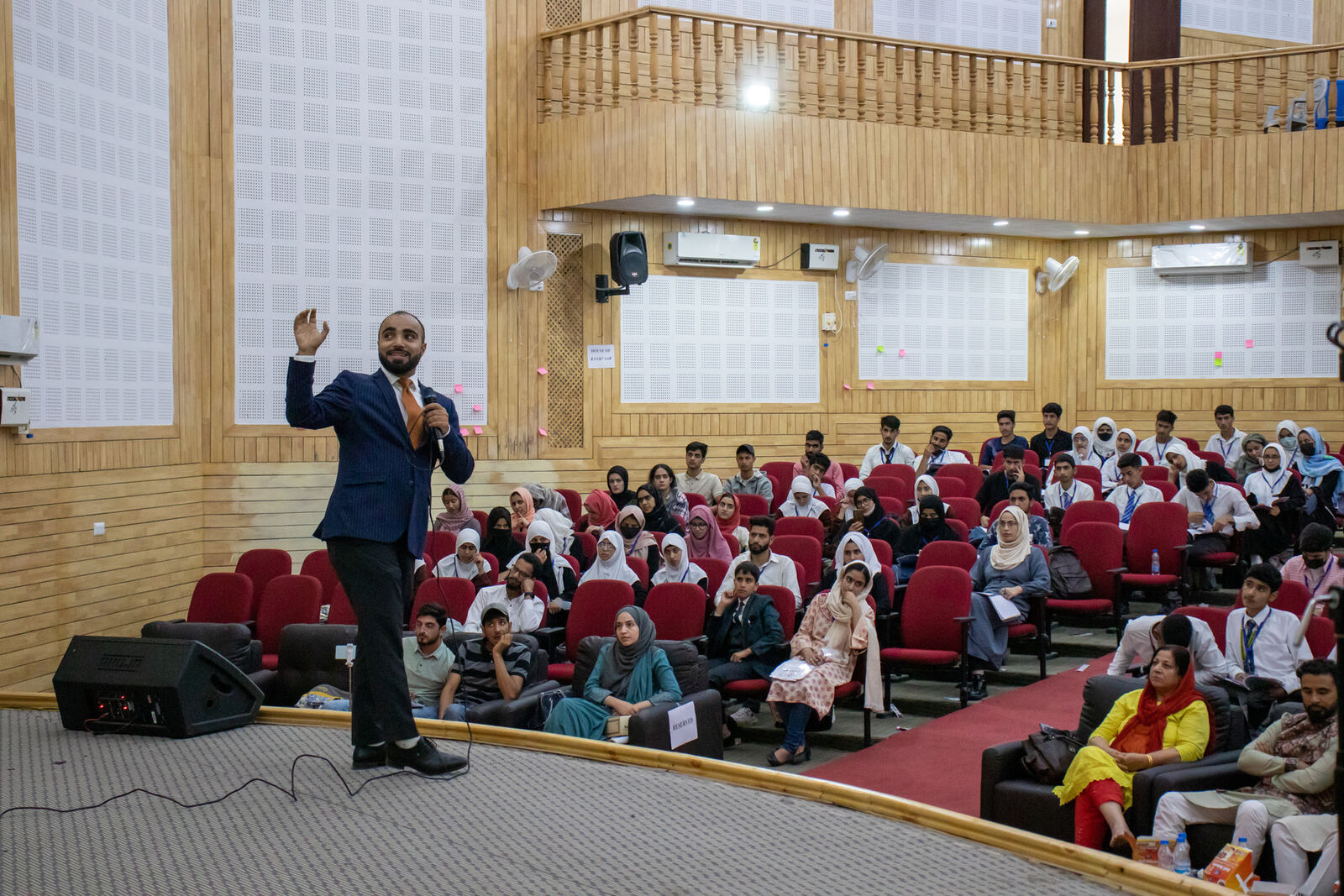
The first 30 seconds: how to open any talk
Your audience decides very quickly whether to lean in or drift off. Here are five openings that work, and three that almost never do.
A three-minute noticing practice for heavy days
When the day feels too heavy to hold, you do not need a retreat. You need three honest minutes. Here is the practice I return to myself.
Small habits, big shifts
We overestimate what one big effort can do and underestimate what a tiny daily habit can become. A short note on the quiet power of small.

Stage fear: a five-step reset before you speak
Your heart races, your hands shake, your mind goes blank. Stage fear is normal. Here is a five-step reset you can do in the two minutes before you walk on.
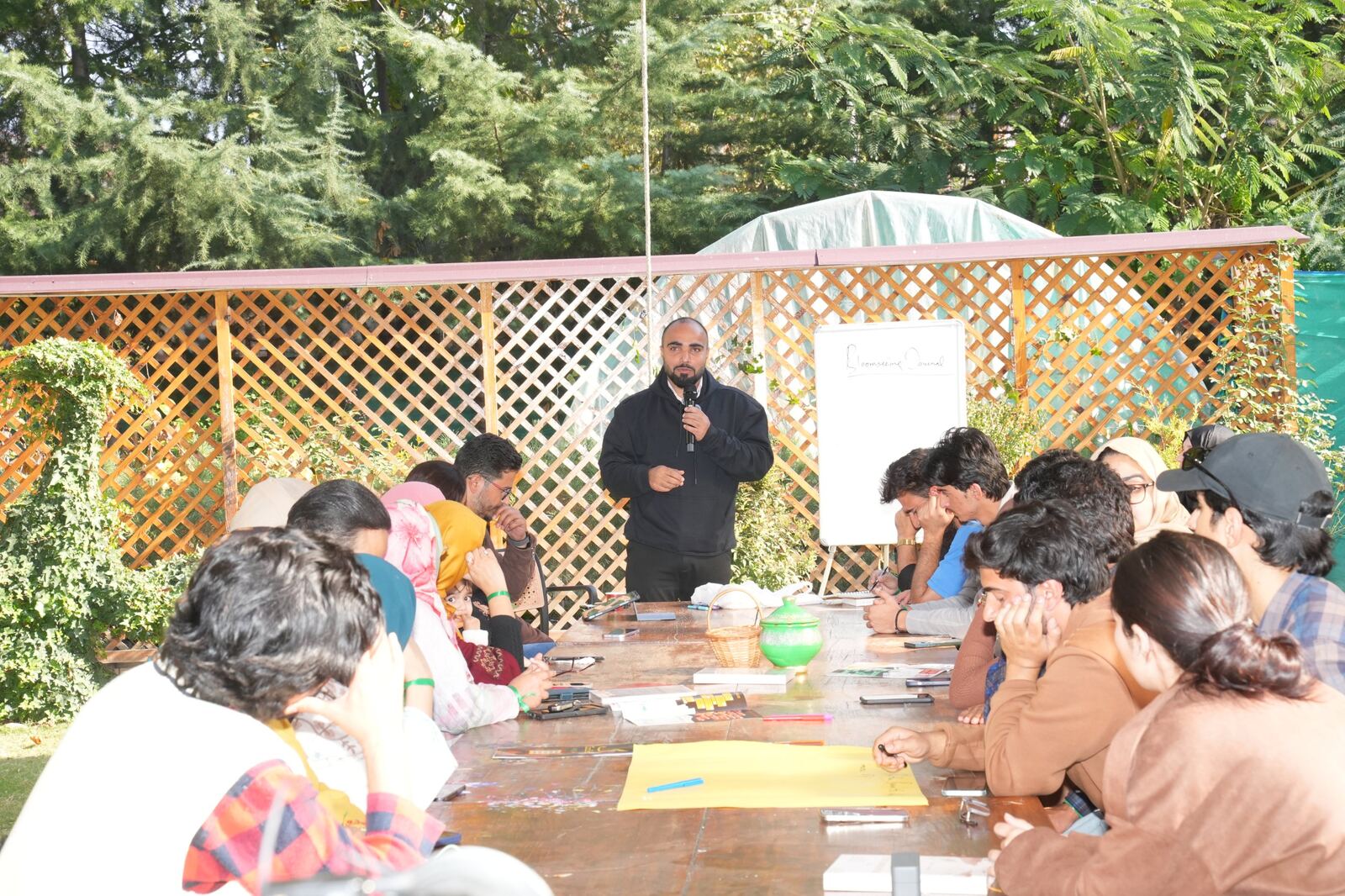
Why growth needs a community
We are taught to improve ourselves alone, with apps and books and willpower. But almost everything that truly changes us happens in the company of others.
What a chinar tree taught me about change
Every autumn the chinar turns from green to gold to fire, and then lets everything go. It has been teaching me about change for as long as I can remember.
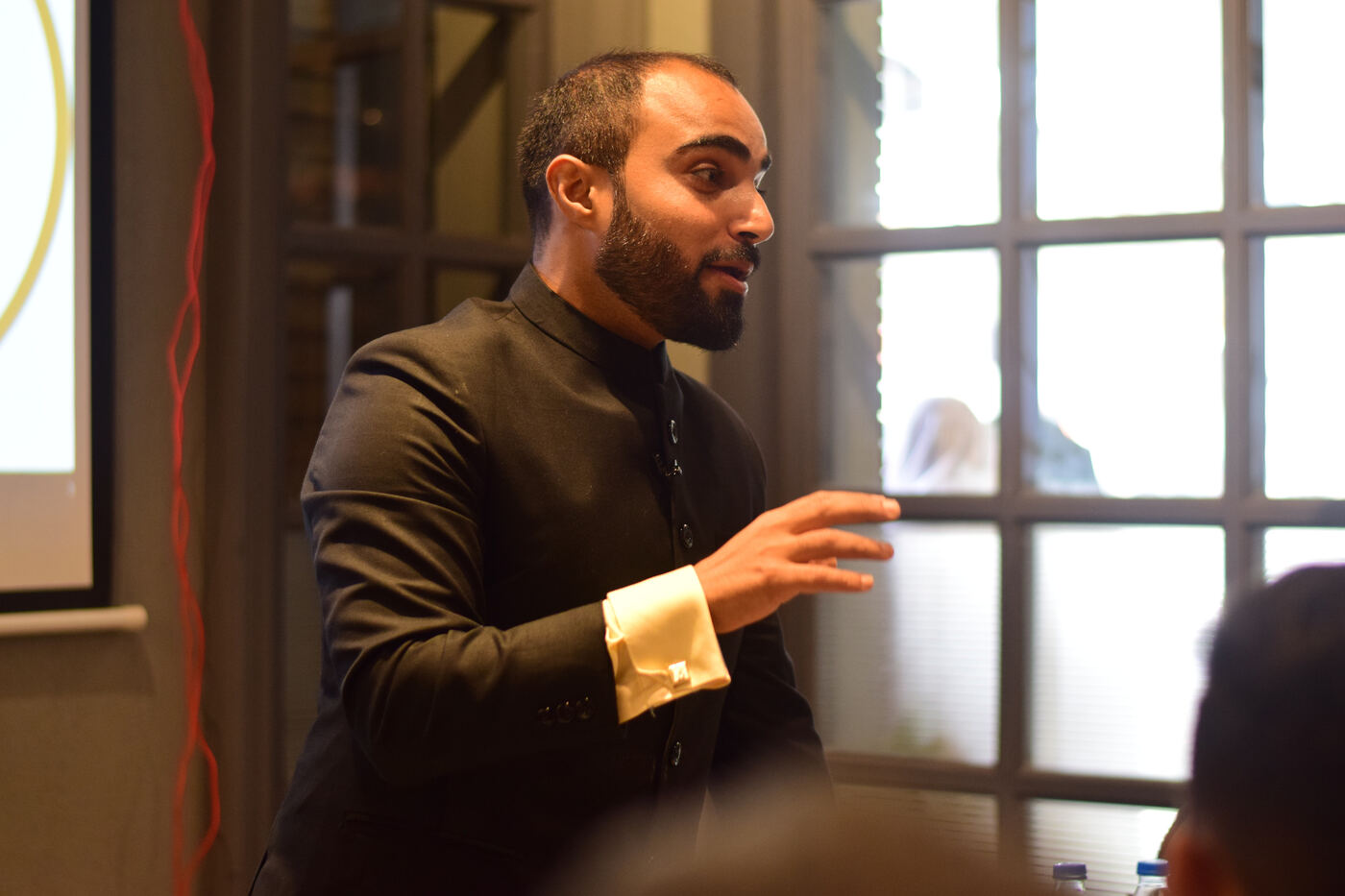
Perspective shifts: when the problem stays the same but you don't
Sometimes you cannot change the situation. You can always change where you stand to look at it. Five perspective shifts I use in coaching.

Which of the 8 speaker archetypes are you?
There is no single right way to be a great speaker. The Speaker's Craft framework identifies eight natural speaking styles. Knowing yours changes how you grow.
What happens at a Compass retreat
People often ask what actually happens when we gather in Kashmir. A gentle walkthrough of the shape of a Compass retreat, without spoiling the surprises.
Informed attention: the idea at the heart of Bloomseeing
Mindfulness asks you to notice. Bloomseeing asks you to notice with purpose. A closer look at the idea I call informed attention, and why it changes how a life feels.
Goals that start with who you are becoming
Most goals focus on what we want to have. The ones that change our lives focus on who we want to be. A different way to plan the year ahead.
The power of the pause
New speakers rush to fill every silence. Great speakers know that the pause is where the audience actually thinks.
Dreams worth having
Some of our dreams belong to us. Some were handed to us. Learning to tell the difference is one of the most freeing things you can do.
Noon chai and the lost art of slowness
In Kashmiri homes, noon chai is never rushed. There is a lesson in that pink, salted cup about how to live.
Making friends with the voice in your head
Your inner critic is not your enemy. It is a frightened guard doing its job badly. Here is how to speak back to it.
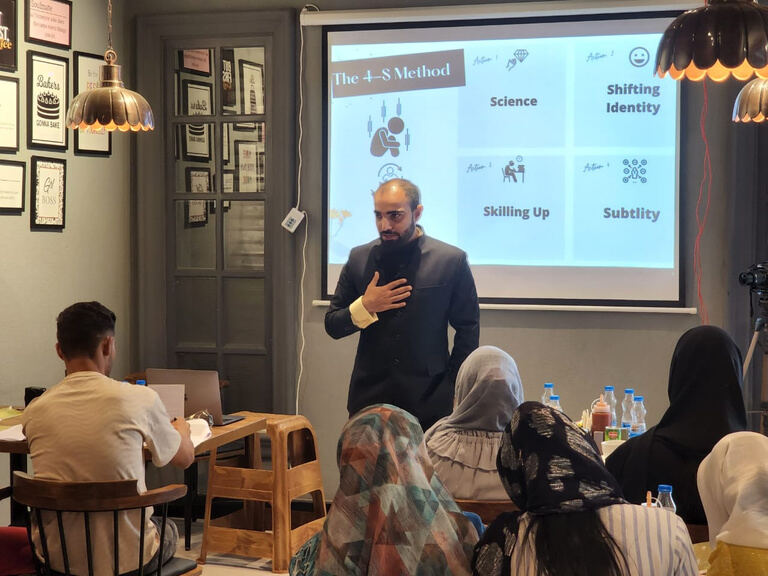
The Story Spine: a simple structure for any story
Stories move people in ways facts cannot. But many speakers ramble when they try to tell one. The Story Spine gives every story a backbone.
Healing is not linear
We expect healing to move in a straight line, each day a little better. It rarely does. Understanding that can save us a lot of unnecessary despair.
Seeing again after loss
Grief changes how we see. For a while, everything looks grey. This is a gentle reflection on how attention can help us return to life without leaving our loved ones behind.
Comparison is a thief with good manners
Comparison rarely announces itself. It slips in politely, through a scroll or a conversation, and leaves with your peace.
Nervousness is energy waiting for a direction
The same energy that makes your hands shake can make your talk come alive. It just needs somewhere to go.
Wellbeing is a practice, not a destination
We talk about wellbeing as if it is somewhere we arrive. It is more like a garden: something we tend, every day, imperfectly.

Beauty is not a luxury
We treat beauty as decoration, something to enjoy once the serious work is done. I think that is backwards.
Starting over is allowed
There is a quiet shame in beginning again: a new career at forty, a new city, a second attempt. Let me say it plainly: starting over is allowed.
How to speak up in meetings when you are not the loudest person
Some of the best ideas in any organisation are never heard because the person who had them could not find a way in. Here is how to be heard without becoming someone you are not.
The letter from your future self
One of the most loved exercises at Compass is a letter written from one year ahead. Here is how to write your own.
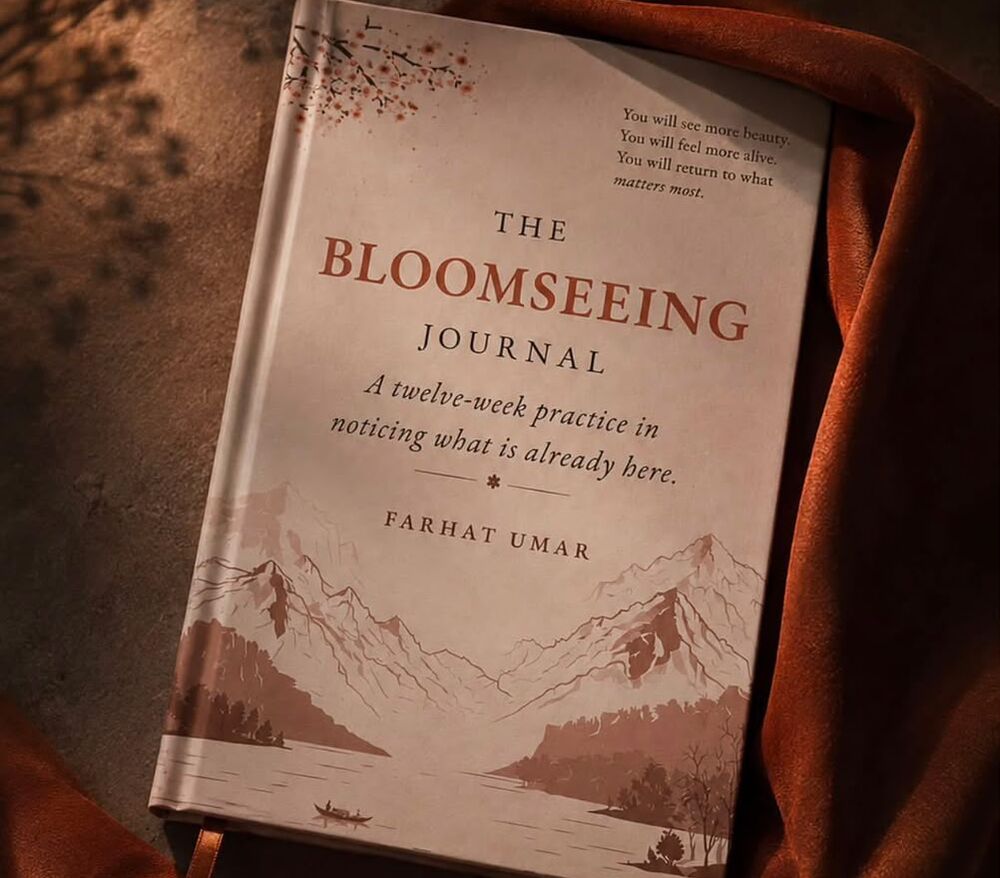
Why writing down what you notice changes everything
Noticing is powerful. Writing it down makes it last. Why I built Bloomseeing around a journal, and how to start one even if you have never kept a diary.
Rest is part of the work
We treat rest as a reward for finishing. The fields of Kashmir lie fallow every winter for a reason.

Body language that says what you mean
Long before your audience processes your words, they are reading your body. A practical guide to standing, moving and gesturing with intention.
Why we step away to grow
Some insights only arrive at a distance. That is why so many traditions send seekers to mountains, rivers and quiet places.
The first snow and the gift of attention
There is a hush that falls over the valley with the first snow. For one morning, everyone looks up.
What fear of failure is really protecting
Fear of failure is rarely about the task. It is about what we think failing would say about us. Understanding that changes everything.
Your voice is an instrument
Many speakers use one note for an entire talk. Your voice can do so much more: pace, pitch, volume and pause are all yours to play.
Mindset, habits, goals and dreams: how they fit together
People often work on one of these in isolation and wonder why nothing changes. At Compass we treat them as one system. Here is how they connect.

Bloomseeing for busy people
You do not need an hour of silence to practise noticing. Five tiny moments woven into an ordinary busy day are enough.
Boundaries are a form of kindness
In a culture that prizes hospitality and saying yes, boundaries can feel rude. They are not. They are how love lasts.
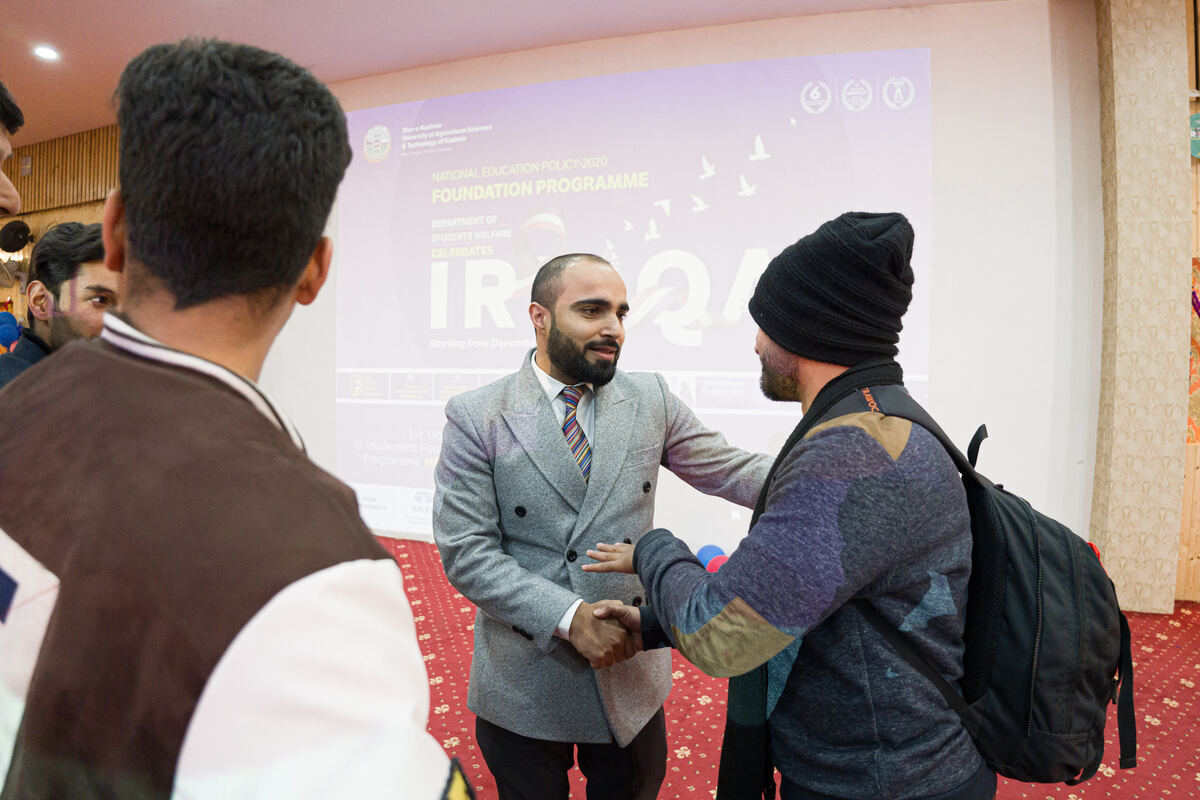
Speaking with confidence in interviews and vivas
Job interviews, PhD vivas, admission panels. These are some of the highest-stakes conversations of our lives. Here is how to prepare to speak at your best.
The gift of being a beginner
Being a beginner is uncomfortable for adults. It is also one of the fastest ways to feel alive again.
The Kashmiri way of seeing
Our poets and saints saw the sacred in the ordinary for centuries before anyone called it a practice. Bloomseeing owes them everything.
What coaching actually is (and what it is not)
Many people are curious about coaching but unsure what happens in a session. A clear, honest explanation of how I work with people one to one.
How to end a talk so people remember it
Many talks do not end. They just stop. A strong ending is what your audience carries out of the room.
The difference between looking and seeing
We look at hundreds of things a day. We see very few of them. A short note on the gap between the two.
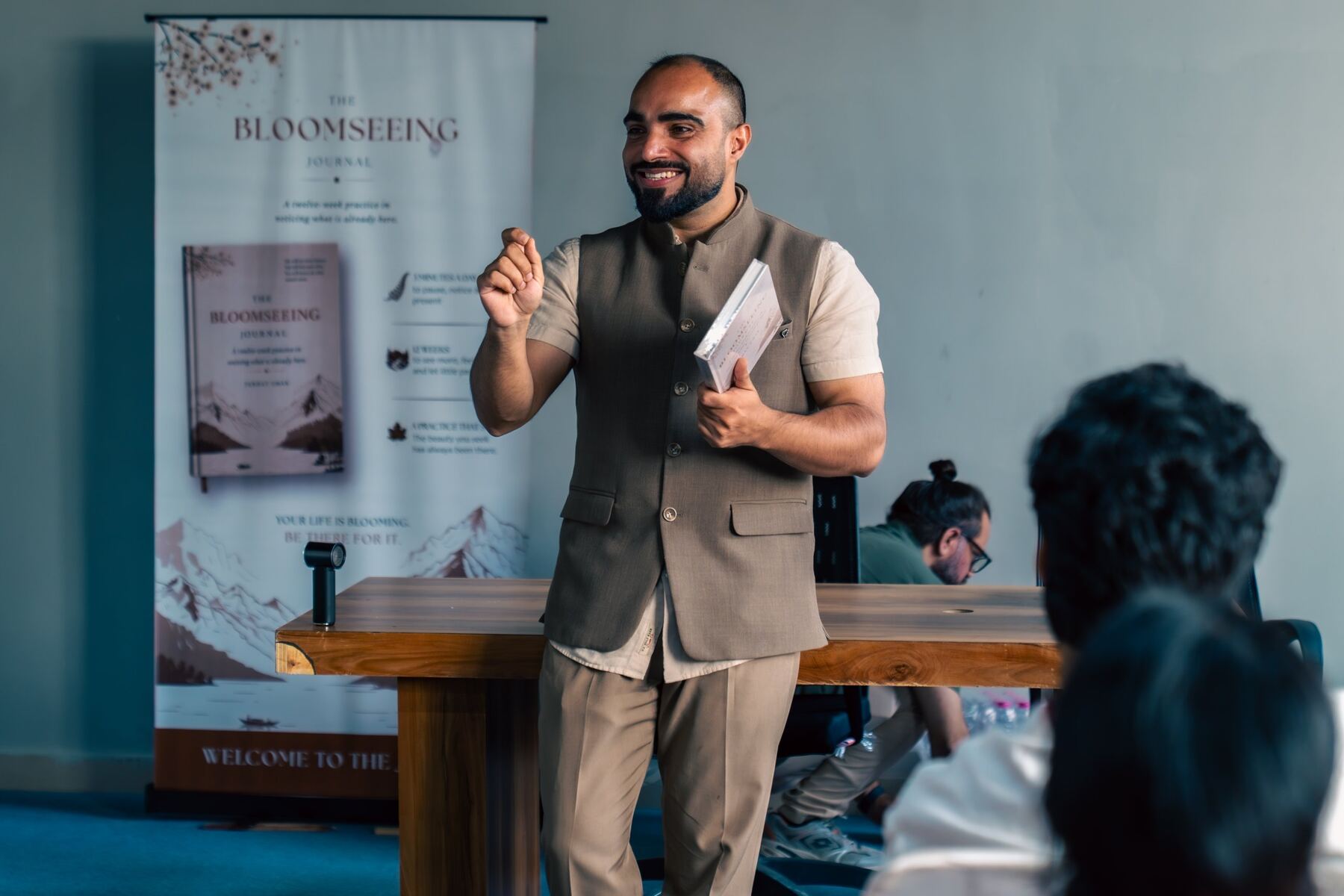
The courage to be seen
Many of us spend our lives hiding the parts of ourselves we think are too much or not enough. Being seen is frightening, and it is where connection begins.
Slides are not your speech
Too many presentations are documents projected on a wall and read aloud. Your slides should support you, not replace you.
Speaking across languages: Kashmiri, Urdu, English and the confidence gap
Many brilliant people in Kashmir and across India hold back because they feel less confident in English. Here is why your mother tongue may be your greatest speaking strength.
Handling questions with grace
For many speakers, the question-and-answer session is scarier than the talk itself. A few simple habits make it the best part.
How to practise like a professional speaker
Most people practise a talk by reading it silently. Professionals practise in ways that look very different. Here is a practice routine you can use for any talk.
No articles match that yet. Try another word or theme.