
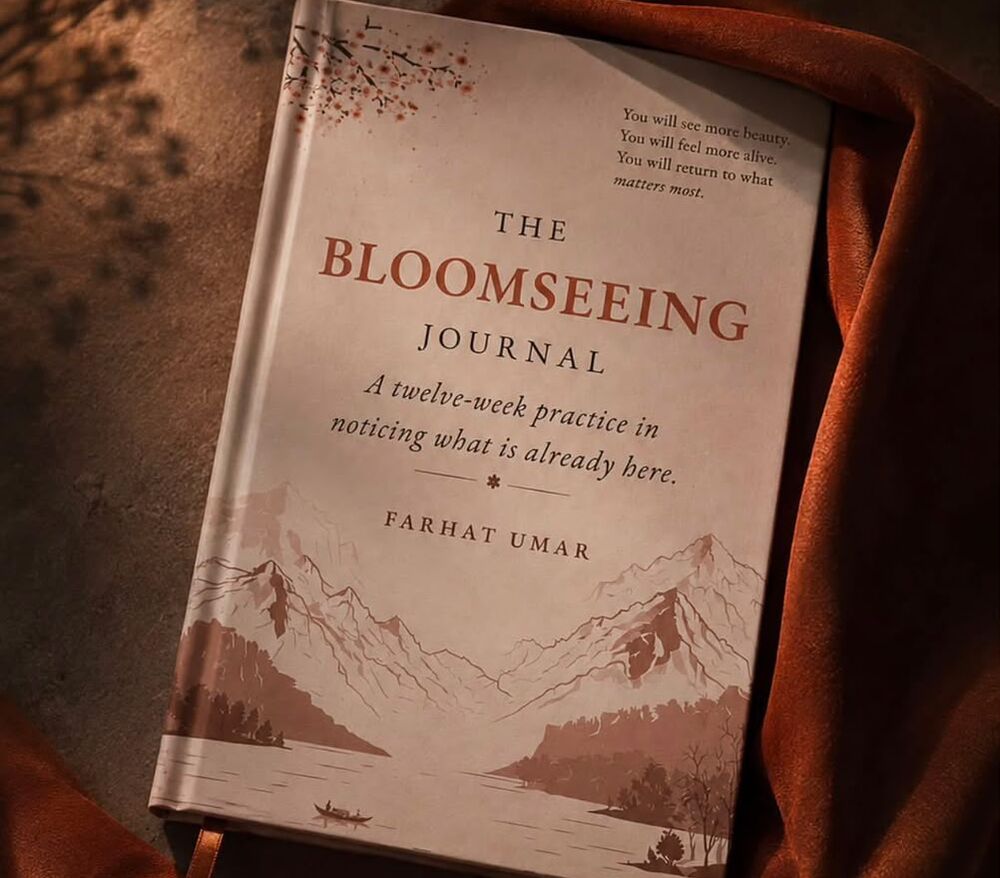
When I designed The Bloomseeing Journal, the most common question I heard was: why a journal? Why not an app, or a course, or a set of videos?
The answer is simple. Writing slows attention down long enough for it to change you.
Noticing fades; writing stays
You can notice something beautiful at nine in the morning and forget it by lunch. Our minds are busy. New impressions push out old ones, especially the gentle ones.
When you write it down, three things happen. You notice more precisely, because you have to find the words. You remember it longer, because the act of writing carves a deeper groove. And you build a record you can return to on the days when life feels empty.
Writing as evidence
That last point matters most. On difficult days, our minds tell us that nothing good ever happens. A journal is evidence against that lie. You can open it and read, in your own handwriting, a hundred small good things that really happened.
A journal is a quiet argument with despair, written one small truth at a time.
You do not need to be a writer
Many people tell me they are "not a writing person". You do not need to be. A Bloomseeing entry can be three lines long. No grammar, no style, no audience. Just honest noticing.
Here is a simple structure:
- I noticed: one specific thing you saw, heard, smelled, tasted or felt.
- It made me feel: one word is enough.
- It reminded me: what this small thing says about your life.
Making it a habit
The hardest part of journalling is not writing. It is remembering to write. Tie it to something you already do. Write while your tea cools. Write before you put your phone on charge at night. Keep the journal where you will see it.
And be kind to yourself when you miss a day. Miss two days, and simply begin again. The practice is not about perfection. It is about return.
The Bloomseeing Journal is a twelve-week guided version of this practice, with a prompt for every day. But a plain notebook works too. What matters is that you begin.