
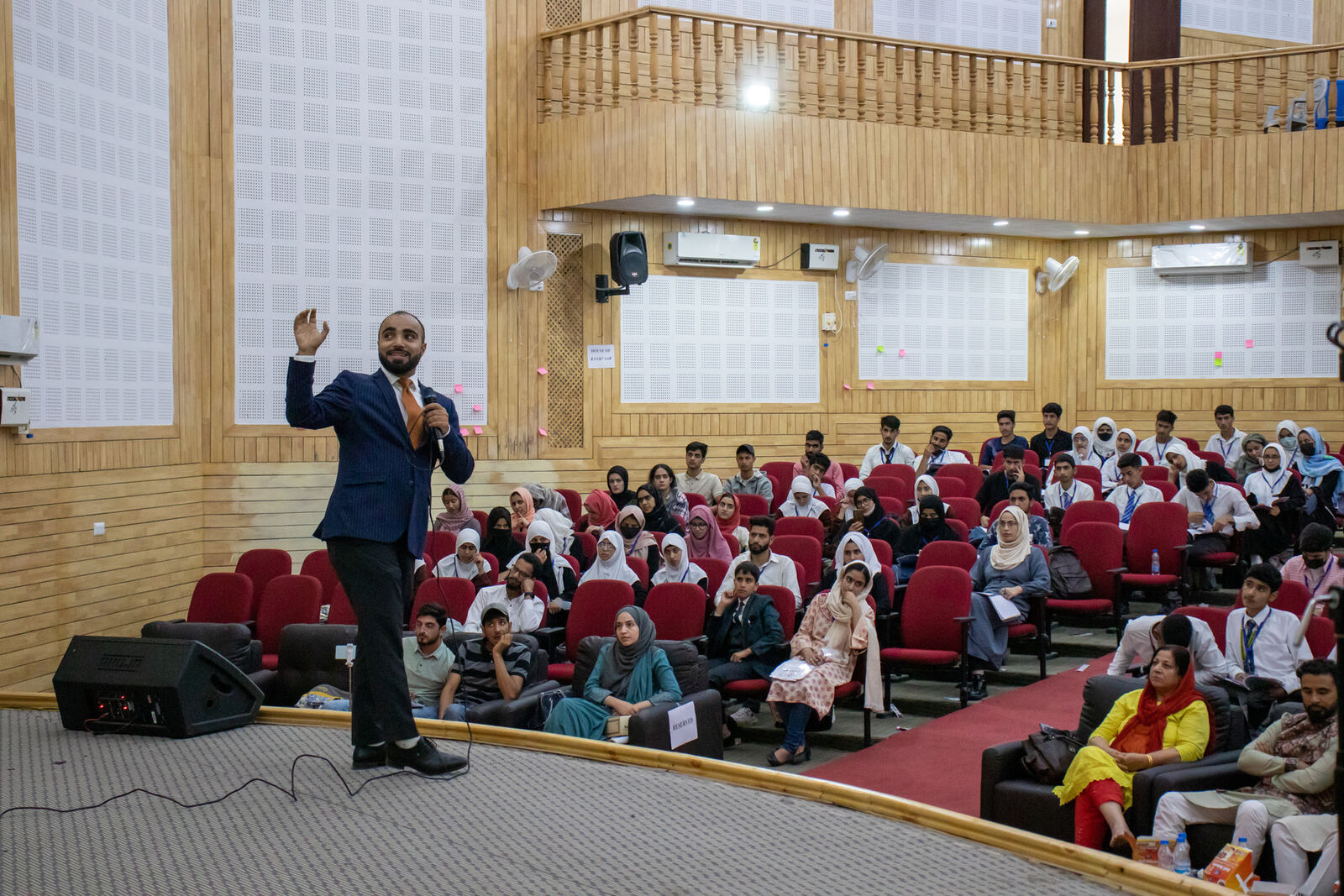
In my workshops across Kashmir and the rest of India, I meet many people who are articulate, funny and wise in Kashmiri, Urdu, Hindi or Dogri, and who freeze when asked to speak in English.
They often believe they are bad speakers. They are not. They are good speakers working in a language that does not yet feel like home.
Separate the skill from the language
Speaking well is not the same as speaking English well. The core skills, structure, story, presence, pause and connection, are the same in every language. If you can hold a room's attention in your mother tongue, you already have the skill. What you need is confidence in the vocabulary.
Your mother tongue is a strength
Our languages carry rich storytelling traditions: proverbs, poetry, a rhythm of speech that English often lacks. Do not abandon them when you switch languages. A well-placed Kashmiri proverb, translated simply, can be the most memorable moment of an English talk.
Practical steps
- Prepare in your strongest language first. Find your ideas and stories where you think most freely. Then translate.
- Use simple English. Short sentences and common words are not a weakness. Some of the most powerful speakers in the world use plain language.
- Do not chase an accent. Clarity matters. Accent does not. Your accent is part of who you are.
- Practise aloud daily. Read aloud for five minutes a day. Fluency is muscle memory.
- Allow mistakes. Audiences forgive grammar. They do not forgive a speaker who never speaks.
Your voice is not less valuable because it has an accent. It is more yours.