
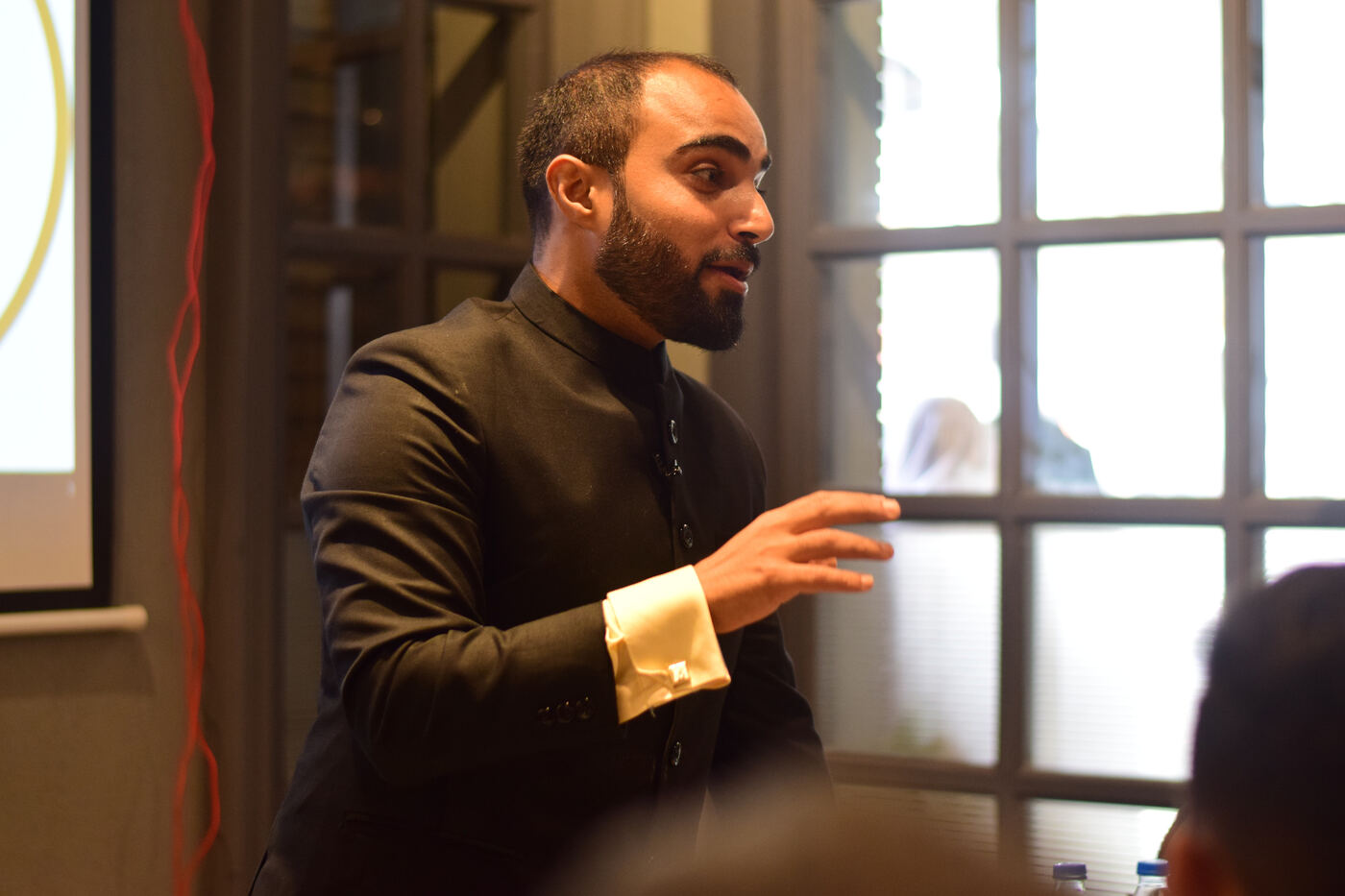
When people prepare a presentation, they usually write it, read it a few times silently and hope for the best. Then they are surprised when the real thing feels shaky.
Silent reading is not practice. Speaking is a physical skill. It lives in your voice, breath and body. You have to practise it out loud.
A practice routine
1. Talk it through, loosely. Before you write a script, explain your talk aloud to an empty room as if to a friend. You will discover what you actually want to say.
2. Outline, don't script. Write key points and stories, not every word. Scripts encourage reading. Outlines encourage speaking.
3. Practise standing up. Rehearse the way you will deliver: standing, moving, gesturing. Your body needs to learn the talk too.
4. Record and review. Record one full run-through on your phone. Watch it once. Choose two things to improve, not twenty.
5. Practise the transitions. Speakers often know each section but stumble between them. Practise moving from one point to the next.
6. Rehearse in front of a real person. A friend, a colleague, a family member. Watch their face. Where do they lean in? Where do they drift?
7. Do a final run the day before, not the hour before. Last-minute rehearsal often increases anxiety. On the day, review only your opening and closing.
How much practice?
It depends on the stakes. A five-minute talk at an important event might deserve many run-throughs. The more important the moment, the more practice pays off.
Amateurs practise until they get it right. Professionals practise until they cannot get it wrong.
Feedback that helps
Not all feedback is useful. "That was great!" feels nice but teaches nothing. "You were terrible" teaches even less. The most useful feedback is specific, kind and actionable.
When you ask someone to watch you practise, give them a focus. Ask: "Where did you lose interest?" or "What was the one thing you remember?" or "Did my opening make you want to keep listening?" Specific questions get specific answers.
When you give feedback to others, use a simple structure: one thing that worked, one thing to try next time. Keep it about the talk, not the person. This is how we run practice circles in the cohort, and people improve remarkably quickly when feedback feels safe.
The plateau
Every speaker hits a plateau. You practise and practise, and suddenly you stop improving. This is frustrating, but it is normal.
Plateaus usually mean you need a new challenge. Speak to a bigger audience. Try a new format: a story without notes, a talk without slides, an impromptu speech. Take the Speaker Competency Index again and focus on your lowest dimension. Growth returns when you stretch in a new direction.
Practise in community
This is why the Speaker's Craft Cohort is built around practice circles: small groups where everyone speaks every week and gets kind, specific feedback. You improve fastest when you practise often, in front of people who want you to succeed.